"Temporary Haven" to "Ticking Time Bomb": Why Malaysia Can't Solve the Rohingya Crisis Alone
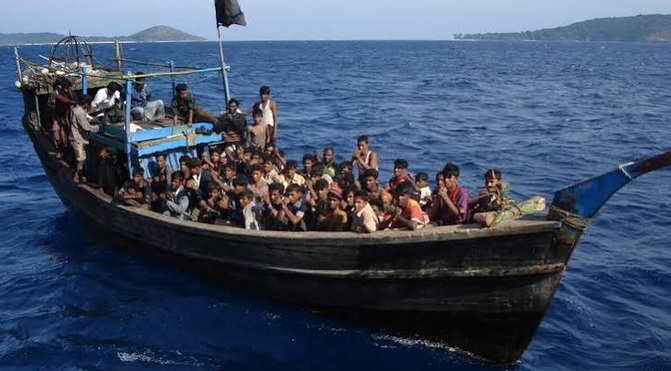
Malaysia was supposed to be a temporary stopover. A safe haven while the world figured out a permanent solution. That was the promise.
But decades later, that "temporary" stop has become a permanent limbo. And now, Muar MP Syed Saddiq is calling it what it truly is: a "ticking time bomb" that could explode into a "nuclear bomb" for our politics, security, and social fabric.
He's right. But who lit the fuse?
The Broken Promise of Burden-Sharing
Let's look at the numbers, because they tell a heartbreaking story of betrayal.
- Malaysia: Hosting over 130,000 registered Rohingya (unofficially nearing 200,000).
- Indonesia: Fewer than 2,600.
- Thailand: Fewer than 500.
- India: Fewer than 20,000 (despite a much larger population).
- Developed Nations: Many pledged resettlement spots but have taken in negligible numbers.
We were told: "Keep them safe in Malaysia while we process their papers. We will take them soon."
That never happened. Instead, Malaysia absorbed the entire burden alone. We became the default destination not because we chose to be, but because smugglers know we are the "soft target" with the most compassionate (or perhaps most helpless) policy.
The Human Cost: Living in Fear
Behind these statistics are real people living in terror.
Take James Bawi, a Chin community leader in KL. He watches as families live in perpetual fear of immigration raids. Parents are too scared to send children to school. Workers are too terrified to leave their homes to buy food, yet they must work to survive. It's an impossible choice: starve in hiding or risk deportation.
And for those being deported? The horizon is grim. Myanmar is engulfed in civil war. The military junta is conscripting young men by force. Sending people back now isn't "repatriation"; it's sending them straight into the line of fire. As one refugee leader put it: "Deportation doesn't mean going home. It means arrest, detention, or death."
Meanwhile, hate speech is rising. Online slurs comparing refugees to "trash bins" are dehumanizing an entire community. We are seeing assaults fueled by disinformation. When a society starts viewing vulnerable humans as enemies, we all lose a piece of our humanity.
The Security Reality: A Magnet for Smugglers
Syed Saddiq warned that our lack of firm action at sea is indirectly incentivizing human trafficking syndicates. If smugglers know they can charge US$5,000 per person to bring refugees to Malaysia with little consequence from the Navy or MMEA, they will keep coming. More arrivals would put more strain on resources. This strain would lead to more public anger. And more anger would cause more political instability.
This is the "nuclear bomb" scenario. It's not just about refugees; it's about the collapse of social order if we don't act decisively.
My Opinion: Stop Waiting for Heroes Who Aren't Coming
Here is the hard truth: The West is not coming to save us.
We can no longer rely on empty promises of resettlement from developed nations. We cannot wait for the UNHCR to magic up a solution while our own streets fill with desperation.
We need a Malaysian solution, backed by ASEAN pressure.
1. Stop the Boats Firmly: The RMN and MMEA must enforce a zero-tolerance policy on illegal sea arrivals. Not to harm refugees, but to break the business model of the smugglers. If the route is closed, the flow stops.
2. Regional Responsibility: This is an ASEAN crisis, not just a Malaysian one. We must drag our neighbors (Indonesia, Thailand) and the international community to the table. If they won't take refugees, they must fund the containment and management here. No more free-riding on Malaysia's compassion.
3. Bipartisan Committee: As Syed Saddiq proposed, we need a special parliamentary committee to handle this above partisan politics. This issue is too big for political point-scoring.
4. Clear Targets: Set a 10-year plan to reduce the refugee population through verified voluntary repatriation (only when safe) and third-country resettlement deals that are actually signed and enforced, not just promised.
A Call to Conscience
To my fellow Malaysians: It is okay to be frustrated. It is okay to demand security and order. But let us not let that frustration turn into hate. The refugees didn't choose this; they fled war and genocide. Blaming a starving family for the failure of international diplomacy is like blaming a drowning man for the hole in the boat.
To our leaders: Stop the rhetoric. Start the action. Secure our borders, demand regional cooperation, and stop letting Malaysia be the world's dumping ground for broken promises.
We cannot defuse this "nuclear bomb" alone. But if we stay silent, waiting for someone else to fix it, the explosion will happen on our soil, and we will all pay the price.
Luah di sini: Do you agree that Malaysia needs to take a harder stance on border control while demanding regional help? Or is there another solution? How do we balance humanity with national security? Share your thoughts.